A Soft Consumer Print Lands Five Days Before the Hawks Get Their Minutes

The Federal Open Market Committee left the federal funds target range at 3.50 to 3.75 percent at its July 28-29 meeting, on a 9-3 vote. What made the meeting unusual was the direction of the dissent. Cleveland's Beth Hammack, Minneapolis's Neel Kashkari and Dallas's Lorie Logan all preferred to raise the target range by a quarter point. In this cycle the contested move is a hike, not a cut, and Friday morning's retail sales report cuts against the people who want one.
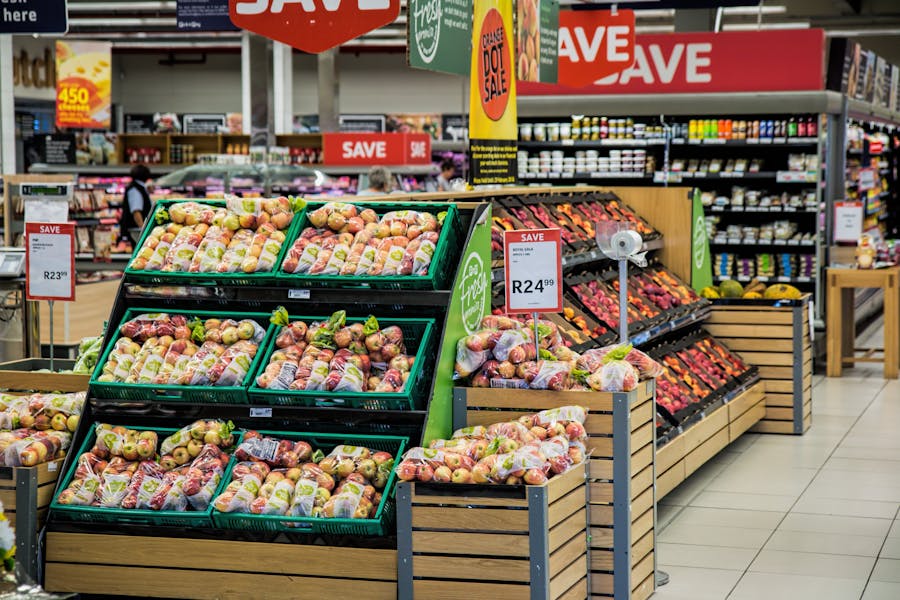
The Census Bureau reported at 8:30 a.m. that July retail and food services sales fell 0.6 percent to $763.6 billion, with sales excluding motor vehicles down 0.3 percent and sales excluding motor vehicles and gasoline down 0.2 percent. Forecast trackers had looked for a small gain: Trading Economics carried a 0.1 percent consensus, and Continuum Economics had published an unchanged headline the day before. Consumer resilience has been one of the load-bearing planks in the hawkish case, and it just got a crack in it.
The timing is what makes this awkward for the committee. Minutes of the July meeting are scheduled for release Wednesday, August 19, at 2:00 p.m. ET. Those minutes will record the state of the argument on July 29 — before the July employment report on August 7, which CNBC reported knocked down September hike odds; before Wednesday's CPI; before Thursday's PPI; and before Friday's retail sales. A hawkish set of minutes will read as evidence of intent, but it will be evidence about a committee that had seen none of the past two weeks' data. Markets will have to discount it accordingly, and that discount is genuinely hard to size.
Chair Kevin Warsh gave the framing himself in July. Asked at the July 29 press conference to characterize the dissenters' arguments, he answered, per the Federal Reserve's official transcript of the session, "So you're right. I asked for a good family fight, and I got one. That's the purpose; that's the design feature." On where the committee actually landed, he said in the same press conference: "But my own judgment is this is a period of watchful thinking, not watchful waiting. And I think the score on that vote was unanimous." That second sentence is the part worth keeping attached to the first. Warsh's claim was not that the committee was divided on the diagnosis — he argued it agreed on that — only that it leaned differently on what to do about it. A chair who wants the argument in the open rather than smoothed over in the statement is a chair whose minutes are likely to show real range, which is why Wednesday's document is worth reading closely rather than skimming for a verdict.
The last hard read on market pricing came Wednesday, after CPI. Fox Business, citing the CME FedWatch tool, reported that the market saw a 61.9 percent probability of the target range holding at 3.50 to 3.75 percent in September, up from 51.6 percent a day earlier, with the odds of a 25-basis-point hike falling to 38.1 percent from 48.4 percent. We have not seen a sourced post-retail-sales reading and are not going to guess at one; the direction a soft consumer print pushes those odds is not in much doubt, but the magnitude is unverified as of this writing.
The commentary from Wednesday is worth revisiting now that a second soft data point has landed on top of it. Ellen Zentner, chief economic strategist for Morgan Stanley Wealth Management, said in comments carried by Yahoo Finance: "In-line inflation will keep the 'no need to hike rates' narrative that took hold after last week's jobs report intact. There will be another round of inflation data before the September FOMC meeting, so the storyline could still change. But unless those numbers tell a much different story, the Fed will likely still be in a position to leave rates unchanged next month." Lindsay Rosner of Goldman Sachs Asset Management said, per Fox Business, that "Contained core inflation adds to the encouraging signs in last month's release of a moderation in underlying inflation, helping strengthen the case for a September hold." Neither was speaking about retail sales, but both framed September as a question of whether incoming data disturbs a hold — and Friday's data did not disturb it in the hawks' direction.
The evenhanded version of the case is that one month proves very little. The retail sales figure is an advance estimate from a subsample, it carries a ±0.4 percent confidence band, and it is not adjusted for prices. Motor vehicles, down 1.8 percent, are volatile enough to swing the headline without saying much about underlying demand. Excluding autos and gasoline the decline was only 0.2 percent, and total sales over the May-through-July window still ran 6.3 percent above the same period of 2025. A committee that already thinks inflation is the binding problem — energy prices were up 14.7 percent year over year in the July CPI even after falling 1.5 percent on the month — can look at this print and conclude that nothing structural changed.
What the hawks lose is narrower but real. Their argument has rested on three legs: inflation still above the 2 percent goal, a labor market that had not cracked, and a consumer who kept spending through it. The July employment report bruised the second leg. Friday's report bruised the third. The first leg is intact — headline CPI at 3.4 percent year over year is not price stability by any reading — but an inflation-only case for tightening into a decelerating consumer is a harder case to carry nine votes with than the one Hammack, Kashkari and Logan lost 9-3 in July.
There is more consumer evidence coming before the committee meets, and most of it arrives in the next week. The University of Michigan's preliminary August sentiment index is due at 10:00 a.m. ET Friday and is not out as we publish; we would note that the widely circulated forecasts for it disagree with one another, so treat any single number you see quoted as a consensus with suspicion. Home Depot reports Tuesday, Target and Lowe's Wednesday, and Walmart Thursday. Walmart's read on its own customer lands the day after the minutes and, unlike a seasonally adjusted subsample, comes with management willing to characterize what it is seeing.
As for the tape, there is not yet a Friday session to describe. Thursday's close had the S&P 500 at 7,798.99, up 0.65 percent — it traded above 7,800 intraday but did not close there — with the Nasdaq Composite at 26,803.03, up 0.81 percent, the Dow at 53,839.99, up 0.13 percent, and the Russell 2000 at 3,052.85, up 0.24 percent. Premarket quotes circulating Friday morning were inconsistent across providers and largely predated the 8:30 release, so we are leaving intraday levels alone. The September FOMC meeting runs September 15-16, with the decision at 2:00 p.m. on the 16th. There is a month of data between here and there.
Sources & further reading
- U.S. Census Bureau — Advance Monthly Sales for Retail and Food Services, July 2026
- Forbes — Fed Keeps Interest Rates Unchanged As Dissent Mounts
- TechTimes — Three Fed Dissenters Signal September Hike Is Live After Most Hawkish FOMC Vote in Nearly Ten Years
- Federal Reserve — Transcript of Chairman Warsh's Press Conference, July 29, 2026
- Yahoo Finance — Cooler CPI inflation reading bolsters case for Fed to hold rates in September
- Kraken Economic Brief — CPI, PPI, and FOMC minutes headline a two-week data window
- Fox Business — Inflation cooled in July but remained elevated as Fed weighs rate hikes
- CNBC — Odds the Fed will hike in September tumble following big July jobs miss
- Trading Economics — United States Retail Sales MoM
- Federal Reserve — FOMC Meeting Calendars, 2026
- Walmart — FY2027 Q2 Earnings Release, August 20, 2026