July Retail Sales Fell 0.6%. Read the Footnote Before You Read the Headline.

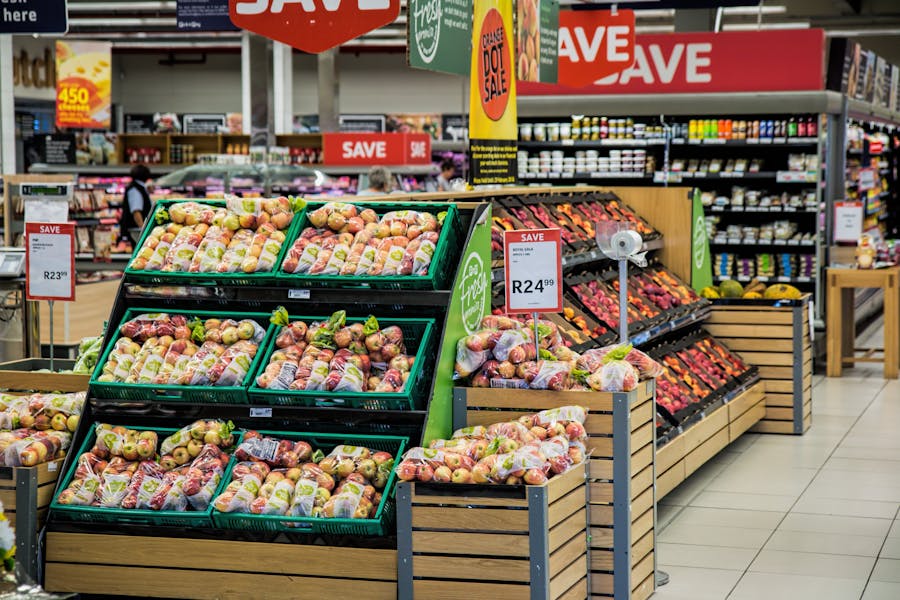
American consumers spent less in July. The Census Bureau's Advance Monthly Sales for Retail and Food Services, released at 8:30 a.m. EDT Friday, put total retail and food services sales at $763.6 billion, down 0.6 percent (±0.4 percent) from June and up 5.0 percent (±0.5 percent) from July 2025. Forecast trackers had been looking for a small gain, and the print went the other way.
Start with the statistics before the storytelling, because there is a footnote on this report that is going to get misread today. The release carries an asterisk keyed to the sentence "The 90 percent confidence interval includes zero. There is insufficient statistical evidence to conclude that the actual change is different from zero." That asterisk is not attached to July's decline. It sits on a different line entirely — the last sentence of the opening paragraph, which reports that the May-to-June percent change was unrevised from up 0.2 percent (±0.3 percent). The arithmetic explains why: a 0.2 percent estimate with a ±0.3 percent band spans roughly minus 0.1 to plus 0.5 percent, so it straddles zero. July's minus 0.6 percent carries a ±0.4 percent band, spanning roughly minus 1.0 to minus 0.2 percent, which does not. On the Census Bureau's own terms, the July decline is distinguishable from zero at 90 percent confidence and the June gain is not. Anyone citing that footnote to wave off the July number has the two lines crossed.
The decline was concentrated rather than broad. Motor vehicle and parts dealers fell 1.8 percent on the month, the largest drop in the table and the single biggest drag given the category's weight. Nonstore retailers, the line that captures e-commerce, fell 2.2 percent. Gasoline stations fell 0.9 percent and electronics and appliance stores fell 0.5 percent. Those four lines carry most of the headline.
The nonstore number is the one worth pausing on. A 2.2 percent monthly drop in e-commerce is not a routine wobble in a series that has been a reliable one-way contributor to the headline. The St. Louis Fed's FRED database for advance nonstore retail sales shows the series rising in every month from February through June of this year, from roughly $134.9 billion in February to roughly $142.7 billion in June. July breaks that run, and it does so in a month with no obvious calendar explanation. It is a single advance estimate and it may be revised, but it is the line to watch when the September 16 report lands.
Plenty of the table did not weaken. Clothing and accessories stores rose 1.9 percent, the strongest gain on the month. Health and personal care stores rose 0.7 percent. Food services and drinking places, the closest thing the report has to a discretionary-services read, rose 0.5 percent, as did miscellaneous store retailers. Building materials and garden equipment, furniture and home furnishings, and general merchandise stores each rose 0.3 percent. Food and beverage stores and the sporting goods, hobby, book and music category were both flat. That is not the distribution you get in a consumer that is retrenching across the board.
Strip out the volatile pieces and the picture softens further but does not collapse. Sales excluding motor vehicle and parts dealers fell 0.3 percent on the month and were up 5.8 percent from a year earlier. Sales excluding both motor vehicles and gasoline stations fell 0.2 percent and were up 4.8 percent year over year. Over the May-through-July window, total sales ran 6.3 percent (±0.5 percent) above the same three months of 2025. The annual comparisons remain firm; it is the monthly momentum that broke.
Against expectations, this is a clear downside miss. Trading Economics carried a consensus of 0.1 percent for the headline. Continuum Economics, in a preview published August 13, forecast an unchanged headline, a 0.2 percent rise excluding autos and a 0.4 percent rise excluding autos and gasoline, writing that consumer spending "was impressively resilient in Q2 despite weakness in real disposable income" and that it expected "a similar gain in July, signaling only a modest loss of momentum." No tracker we reviewed had a decline in the range. The gap between roughly zero and minus 0.6 percent is the news.
One correction most readers will not make on their own: this series is not adjusted for price changes. July CPI, released Wednesday, rose 0.1 percent on the month and 3.4 percent from a year earlier, with core up 0.2 percent and 2.5 percent. Because monthly inflation was close to flat, the real July decline in retail sales is very nearly as large as the nominal one. The year-over-year comparison works the other way: a 5.0 percent nominal gain against 3.4 percent headline inflation still leaves real spending growing.
The gasoline line rewards a second look for the same reason. Dollar sales at gasoline stations fell 0.9 percent on the month while the CPI gasoline index fell 2.9 percent, which is consistent with motorists buying more gallons even as they spent fewer dollars. Run it over a year and the sign flips: station receipts were up 16.2 percent from July 2025 while the CPI gasoline index was up 24.6 percent, implying volumes below where they were a year ago. The two series are built differently and are not a clean deflator, so treat this as a direction rather than a measurement.
The usual caveats apply and matter more than normal on a surprise print. Advance estimates are drawn from a subsample and are revised; June's level stands at $768.1 billion in the current table against July's advance $763.6 billion, and July's own figure will move. One month does not establish a trend, and autos are volatile enough to do this on their own. Census has the next report scheduled for 8:30 a.m. on September 16 — the same day the Federal Open Market Committee announces its September decision at 2:00 p.m. Policymakers will get August retail sales roughly five and a half hours before they have to say what they think of the consumer.
Sources & further reading
- U.S. Census Bureau — Advance Monthly Sales for Retail and Food Services, July 2026
- Trading Economics — United States Retail Sales MoM
- Continuum Economics — Preview: Due August 14, U.S. July Retail Sales
- FRED, St. Louis Fed — Advance Retail Sales: Nonstore Retailers (RSNSR)
- Fox Business — Inflation cooled in July but remained elevated as Fed weighs rate hikes
- Federal Reserve — FOMC Meeting Calendars, 2026


